1
/
of
4
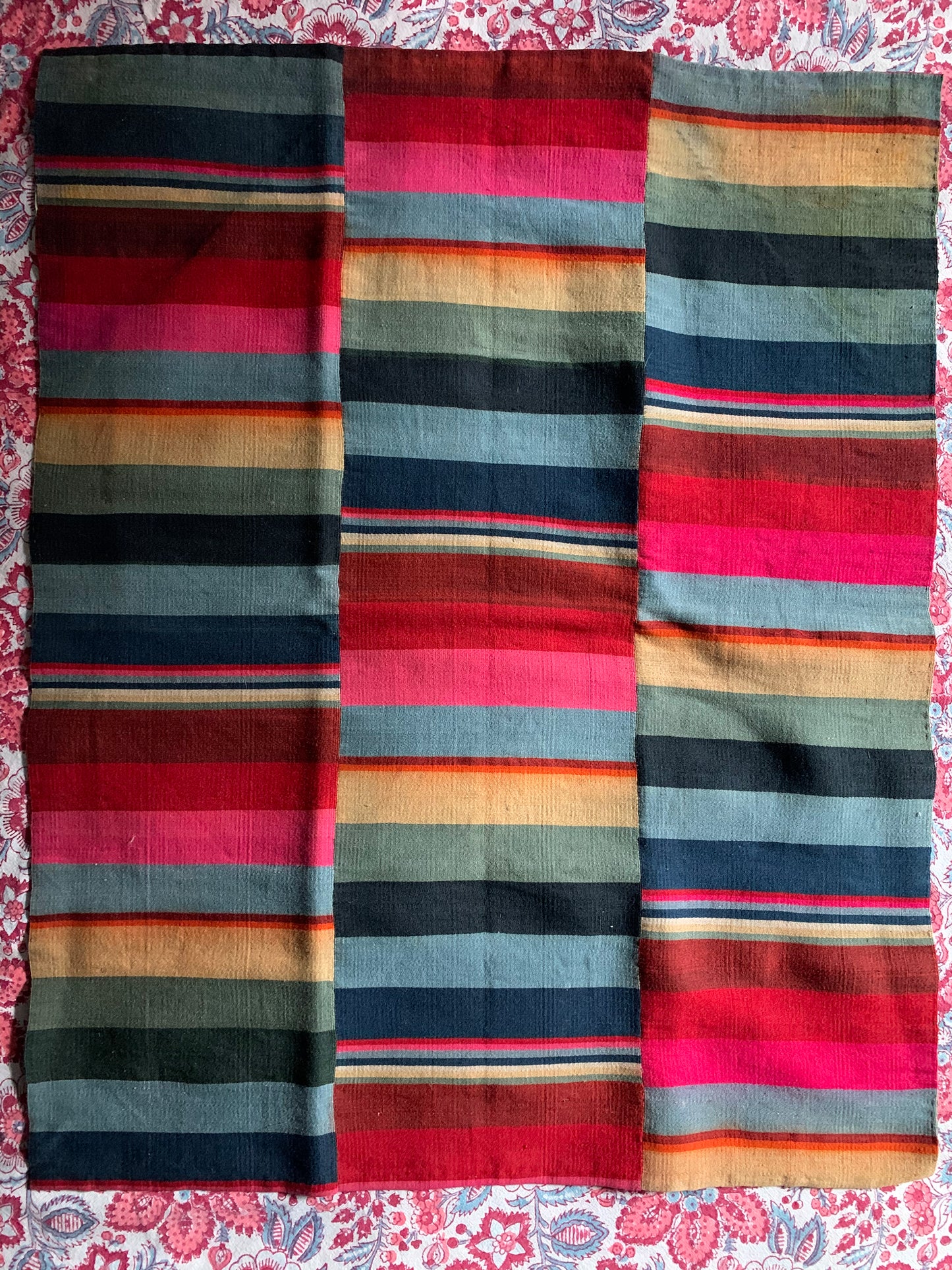
An antique Tibetan woman’s hand-woven, woolen apron - pangden.
An antique Tibetan woman’s hand-woven, woolen apron - pangden.
Regular price
$650.00 USD
Regular price
Sale price
$650.00 USD
Shipping calculated at checkout.
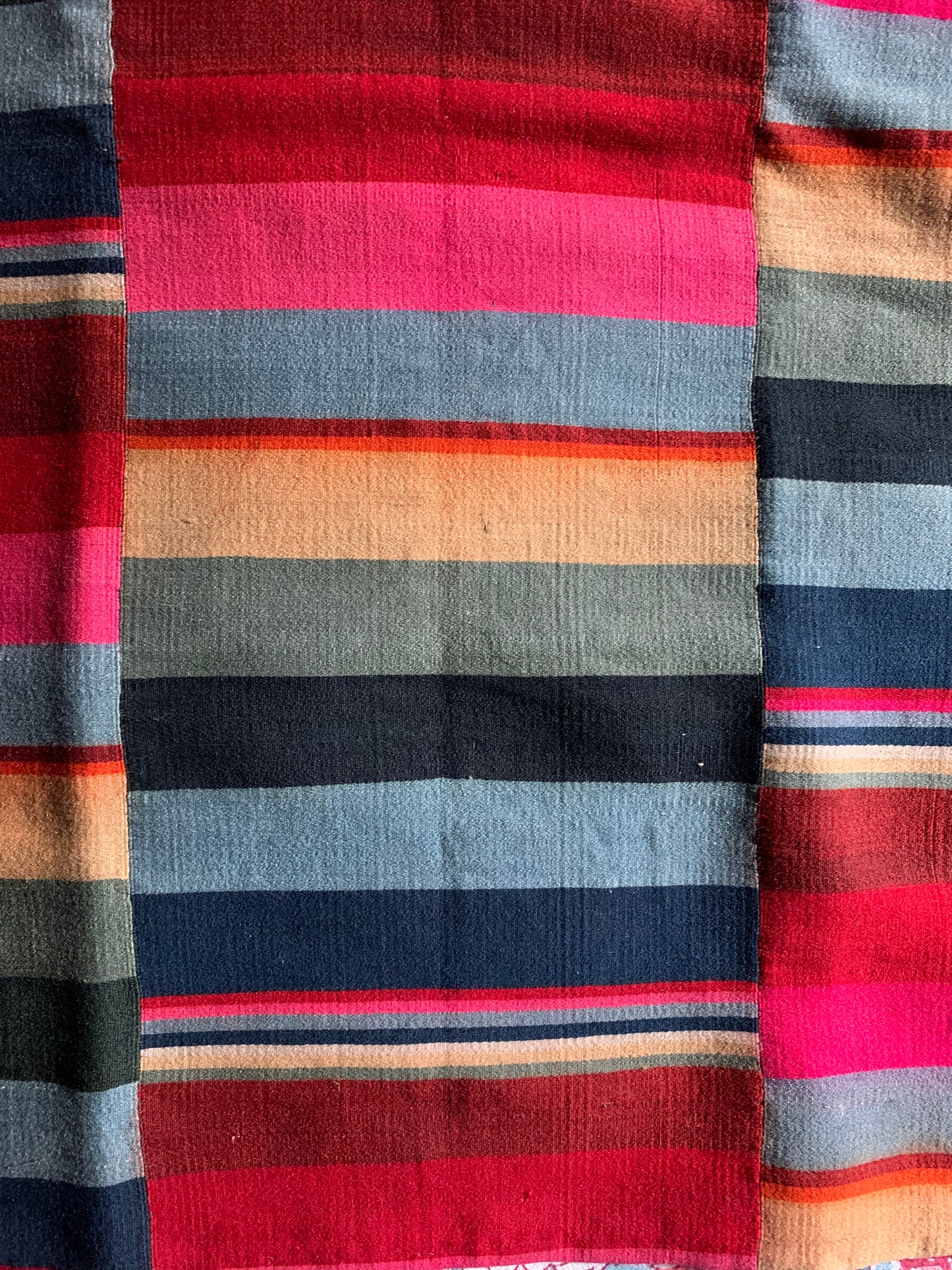
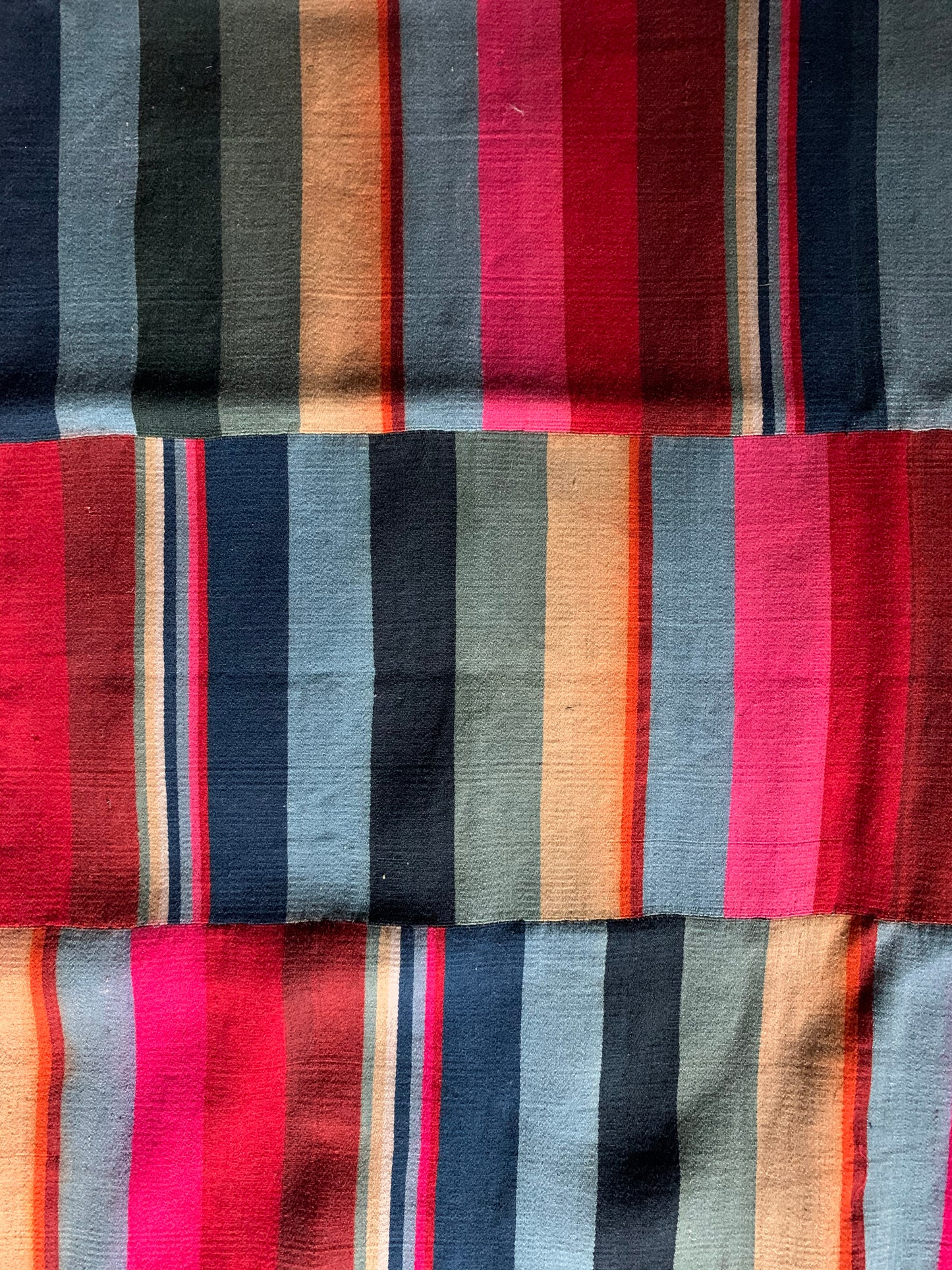
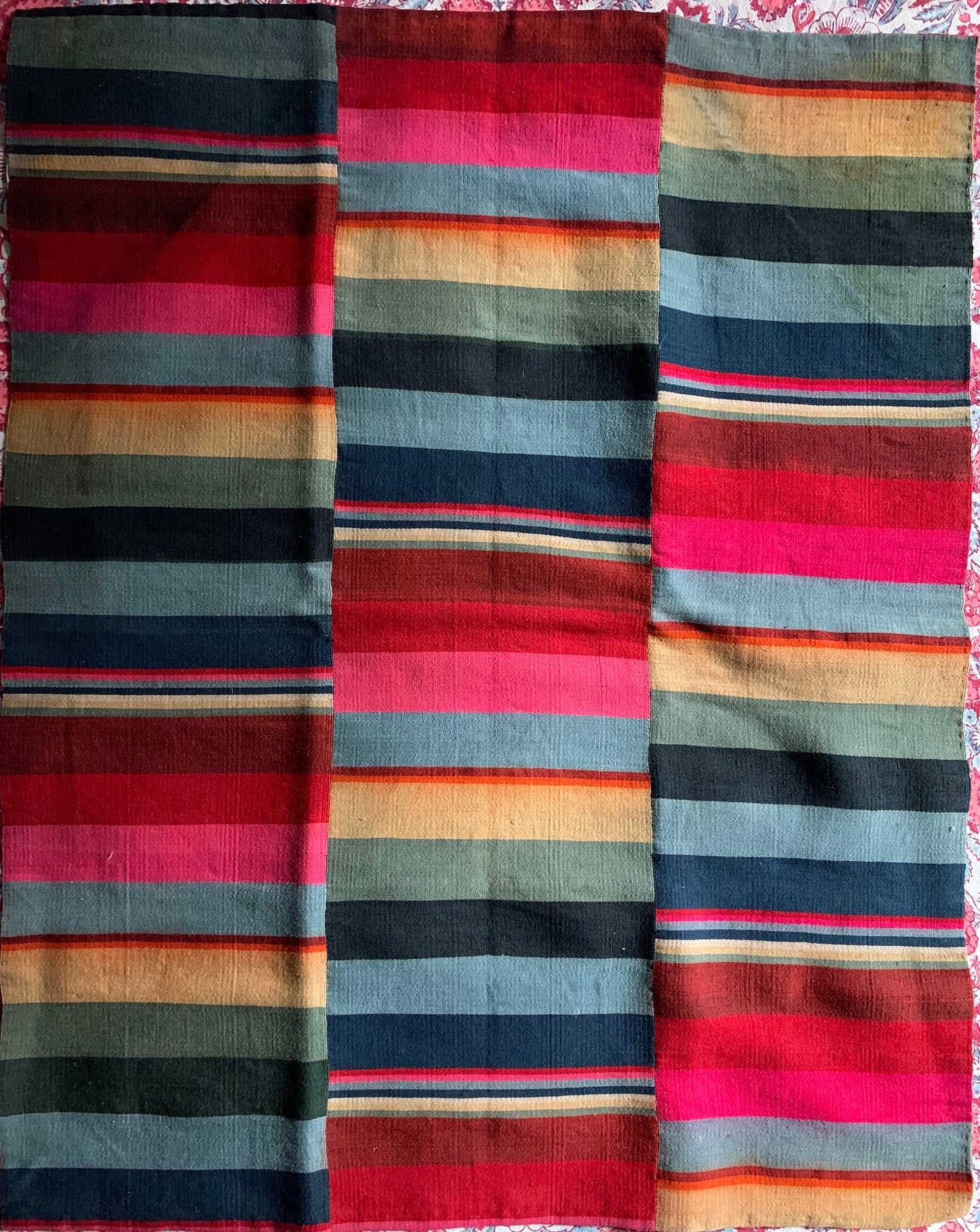
The “pangden” is the apron worn by Tibetans and Himalayan women in front of their Chubas - dress. The pangden represents marriage -that the woman wearing it is married in most Himalayan cultures. This pangden measures 22”x27”(l) and consists of three separate woven panels sewn together to form one apron panel. Made of wool, the colors of the apron suggest that this apron was made after the early 1900s when chemical dyes made their way to Asia. The pangden is intact and in great condition. The bright colors of the pangden and traces of the triangular brocades used on the corners of the apron suggest that this apron was used for special occasions.
Pangden making is not just a craft but an art and tradition that is passed down generations. While the weavers spend years trying to master their skills of weaving, the patterns and the art of mixing various colors is a refined skill that takes a lot of practice and observation. This is an important skill as the pangden brings the Tibetan women’s outfit together- the colors of the chuba and blouse are brought together by the colors in the pangden.
Made with silk thread today, these are handmade in looms, three panels are stitched together to form the apron. Traditionally, wool was used to make pangdens - and was a much more involved process as the yarn had to be hand spun and consistent. Woolen yarn often breaks -making weaving a challenge. Silk threads took care of that but lacks the richness of wool.
The pangden can be used as is today; but also as fabric to create beautiful household items or framed in picture frames to add a touch of
fertile colors in barren modern homes.
Pangden making is not just a craft but an art and tradition that is passed down generations. While the weavers spend years trying to master their skills of weaving, the patterns and the art of mixing various colors is a refined skill that takes a lot of practice and observation. This is an important skill as the pangden brings the Tibetan women’s outfit together- the colors of the chuba and blouse are brought together by the colors in the pangden.
Made with silk thread today, these are handmade in looms, three panels are stitched together to form the apron. Traditionally, wool was used to make pangdens - and was a much more involved process as the yarn had to be hand spun and consistent. Woolen yarn often breaks -making weaving a challenge. Silk threads took care of that but lacks the richness of wool.
The pangden can be used as is today; but also as fabric to create beautiful household items or framed in picture frames to add a touch of
fertile colors in barren modern homes.
Product features
Product features
Materials and care
Materials and care
Merchandising tips
Merchandising tips
Share